There are two ways to talk about AI in engineering right now. One is breathless: fully autonomous design systems running entire product cycles while you sip coffee. The other is grumpy: "it's a chatbot, it can't calculate a bending moment, leave me alone."
The truth, as usual, is in the boring middle. And the boring middle is where the money is.
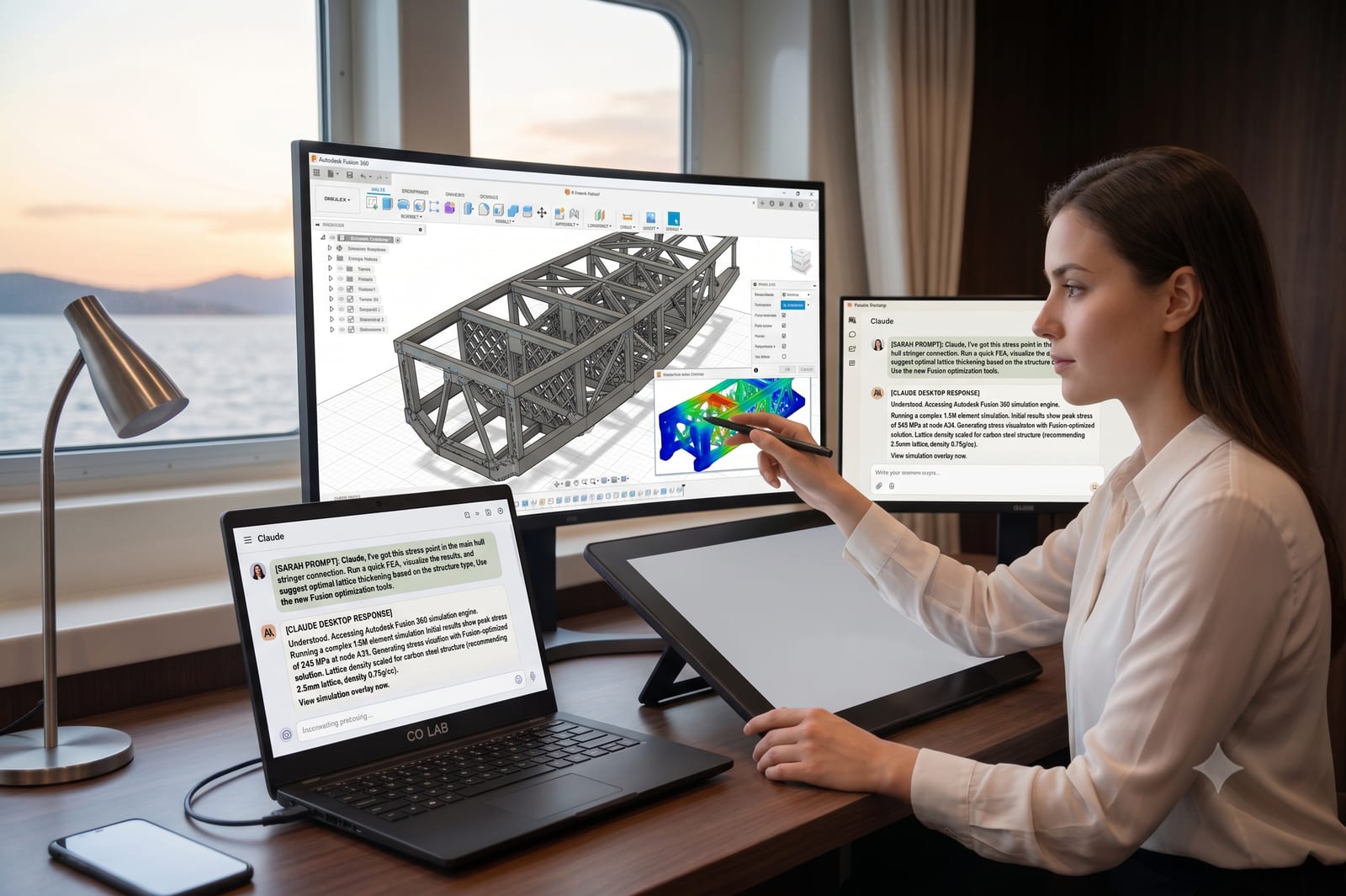
AI as an "intelligence layer," not a replacement
The most sensible framing we've seen in 2026 is this: AI isn't replacing your CAD, it's becoming an intelligence layer over it. SolidWorks, Inventor, Creo, NX, the tools that have run product design for decades, aren't going anywhere. What's changing is the layer of assistance sitting on top: finding parts, checking a design against a standard, flagging a manufacturability problem before it becomes an expensive change order, exploring more design variants than a human has hours for.
Teams doing this well report design reviews finishing dramatically faster and catching DFM issues earlier. Not because a robot did the engineering, but because a tireless assistant did the tedious cross-checking that humans quietly hate and occasionally skip.
The catch nobody in the sales deck mentions
General-purpose AI doesn't understand engineering. It has never held a caliper. Ask a generic chatbot about GD&T or a tolerance stack and it will answer with total confidence and occasional nonsense, which, in engineering, is the dangerous combination. The value comes from using AI for what it's genuinely good at (language, patterns, drudgery, first drafts) and keeping a competent human firmly on the numbers that matter.
Put bluntly: AI is a superb junior who never gets tired and must never be left in charge of the safety-critical maths.
Where we actually use it
We use AI to speed up the unglamorous 40% of a project: documentation, first-pass research, sorting through options, drafting, cross-referencing, so the human hours go where they earn their keep: the difficult design decisions, the physics, the judgement calls. That's also the service we offer clients: not "sprinkle AI on it and hope," but working out where in your workflow it saves real time, and where it should be kept well away.
The honest takeaway
If someone promises you AI that does your engineering, keep one hand on your wallet. If someone helps you use AI to delete the tedium and give your engineers their afternoons back, that's the actual 2026 opportunity.
Curious where it might fit in your projects? Let's talk. We'll give you a straight answer, including the bits where AI isn't the answer.