Here is an uncomfortable fact. While the UK argues about planning permission, other countries have been printing entire houses out of concrete: walls up in a day or two, less waste, fewer hands needed on site. And we are, politely, miles behind.
Everyone else is already doing it
The United States has neighbourhoods (actual, occupied neighbourhoods) built by giant gantry printers. The Netherlands handed over a printed home years ago. Germany, Denmark and much of the Gulf have printed housing on the ground. In China, printed structures have gone up at a pace that makes British construction timelines look positively Victorian.
The common thread: print the structural shell fast, cheaply and with a fraction of the labour, then fit it out conventionally. It is not science fiction. It is a wet mix, a nozzle, and some very careful motion control.
Meanwhile, in Britain
We have a housing crisis measured in the hundreds of thousands of homes, a construction labour shortage, and a building method that has barely changed in a century. It is a strange position to be short of both houses and the people to build them, and to be sitting on a technology that helps with both, while barely using it.
Some of this is caution, some regulation, some the sheer inertia of an industry wedded to its established methods. None of it is a good enough reason to keep losing the race.
Why we care rather a lot
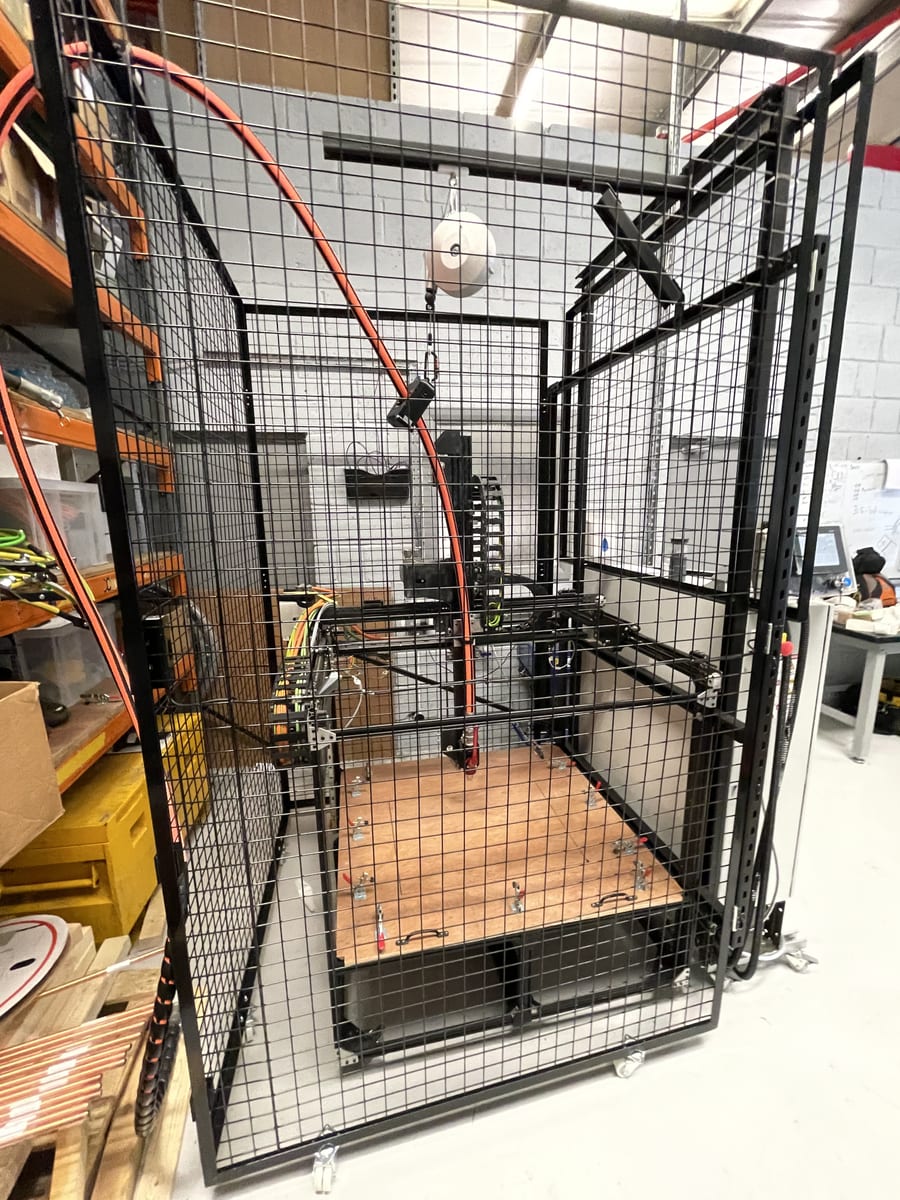
This is personal territory. We helped design and build one of the UK's early concrete 3D printers, a gantry that lays cementitious material layer by layer, so we have felt, first-hand, both the promise and the fiddly reality of the technology. It works. It needs serious engineering to work reliably, which is exactly the kind of unglamorous problem we enjoy.
The opportunity
Every country that gets good at printing homes builds an industry around it: the printers, the mixes, the control systems, the trained people. Britain could be exporting that expertise instead of importing it. The housing crisis is the burning platform; the technology is ready; the missing ingredient is ambition and engineering graft.
We would rather be part of closing that gap than writing another blog post about it. If you are working on anything in this space, we should talk.